
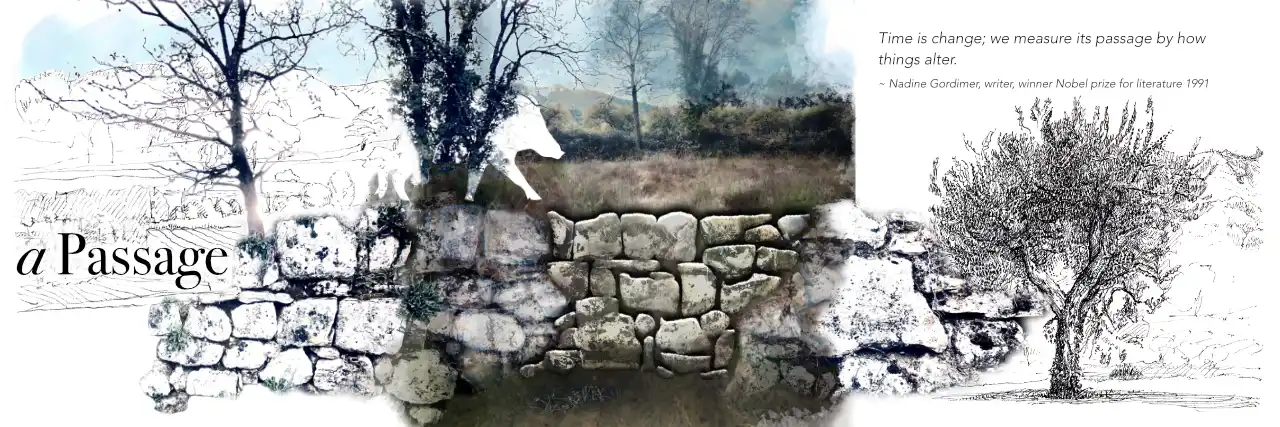
It would be disrespectful to compare lay brothers and stone cutters with wild boars. But as they say, where there is a will, there is a way. And they certainly had that in common.
The Abbey of Sénanque (12th-13th C.) took about 60 years to build. The distance from the stone quarry in Oppède-le-Vieux to the yard on the river Sénancole is approximately 17km on foot. (explanatory animation in this blogpost) What once started as a forest path must have quickly grown into a decent road. Along the way, the landscape most certainly was thoroughly reformed by the continuous transport of stones.
I’m just speculating when I see the breach in the dry stone wall where wild boars, coming from the mountain, have made a passage to look for water in the valley during dry periods. Once the goal is in mind, everyone chooses the easiest and shortest route. No matter what.
Nadine Gordimer, writer, Nobel Prize for literature 1991
“Time is change; we measure its passage by how things alter.”


Leave a Reply